A sandstone selected for a wall can fail on a walkway, while a visually attractive paving slab can absorb water, abrade, or delaminate outdoors. By the end, you will be able to match sandstone properties and installation systems to the exposure, compare technical documents, inspect production samples, and identify the drainage and movement details that protect an exterior project.
Key takeaways
- Match sandstone selection to the cladding system and fixing method.
- Specify paving by traffic load, water exposure, abrasion and slip resistance.
- Request production samples, test reports and traceable batch information.
- Detail joints, drainage and ventilation for heat, monsoon rain and polluted air.
Choose the sandstone and cladding system together
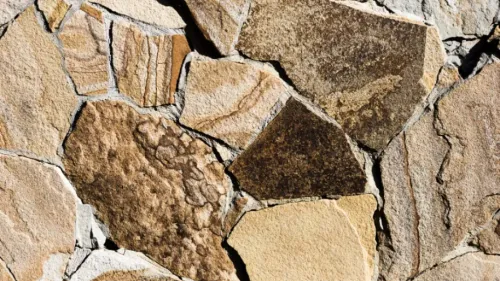
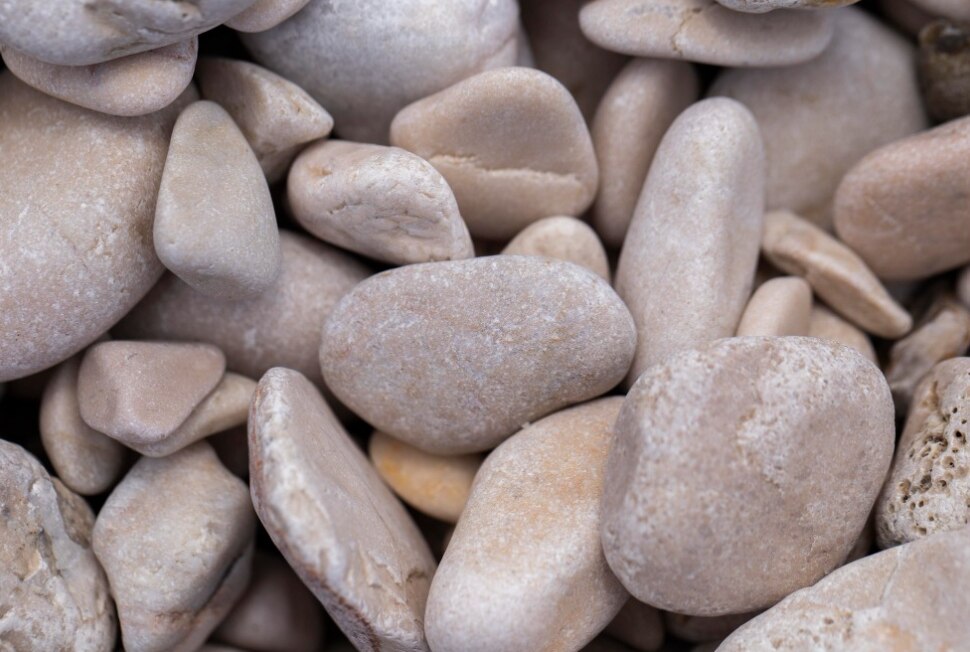
Choose the sandstone and its cladding system as one design decision. Two stones sold under the same color name can differ sharply in grain size, pore structure, cement type, bedding planes, and weathering history.
Those differences control water absorption, apparent density, flexural strength, salt resistance, staining, and resistance to granular disintegration caused by wetting, drying, and salt crystallization.
| System | Load and water strategy | Suitable use |
|---|---|---|
| Mechanically fixed panels | Designed supports and anchors carry dead load and wind load; joints accommodate movement | Elevated or large-format exterior sandstone cladding |
| Adhered veneer | Adhesive bonds units to a prepared substrate; performance depends on bond, substrate, panel size, and exposure | Smaller, lighter veneer where the system is specifically approved |
| Rainscreen system | Anchored outer stone sits before a drained, ventilated cavity with flashings and weeps | Exposed façades requiring controlled drainage and pressure moderation |
A thin panel can break under wind suction or handling by bending, even when its compressive strength is high. Adhesive-only installation is not automatically suitable for an exposed or large-format façade.
Request ASTM C97/C97M results for absorption and bulk specific gravity, ASTM C170/C170M for compressive strength, ASTM C99/C99M and ASTM C880/C880M for bending performance, and ASTM C1354/C1354M for individual stone-anchor capacity. Anchor design must account for panel thickness, edge distance, stone variation, wind pressure, and tolerances; cladding performance cannot be inferred from compressive strength alone.
Specify sandstone paving for traffic, water, and slip conditions
Pedestrian paving, vehicle-overrun zones, and suspended slabs need different designs; paving thickness cannot be chosen from the word sandstone. Check traffic loads, span, support, bedding, joint layout, and edge restraint before ordering.
A slab on rigid concrete behaves differently from units on a mortar bed or compacted granular base: concrete limits settlement but transfers cracking, while a flexible base tolerates settlement through adjustment rather than forcing the stone to bridge it.
Compressive strength does not measure foot-traffic wear. Request abrasion testing to ASTM C241/C241M, then assess slip resistance in the specified surface finish while wet. Monsoon rain can make a smooth, attractive sample hazardous.
| Surface finish | Main benefit | Risk or control |
|---|---|---|
| Sawn | Consistent thickness and clean joints | Assess wet slip; surface can be smooth |
| Natural-cleft | Texture and drainage underfoot | Uneven height, chipped edges, difficult furniture |
| Honed | Even appearance and easy cleaning | Wet slip resistance can fall sharply |
| Textured | Better grip potential | Confirm cleanability and actual wet performance |
Specify edge details where paving meets drains, walls, steps, and vehicle paths; unsupported or chipped edges fail first. Set joint widths to accommodate unit variation and movement, provide falls toward unobstructed drainage, and include movement joints through rigid beds and concrete.
Inconsistent thickness requires leveling during installation or calibrated units; resolve that before buying large quantities. A wall-grade stone is not automatically floor-grade.
Inspect production samples and request the right reports
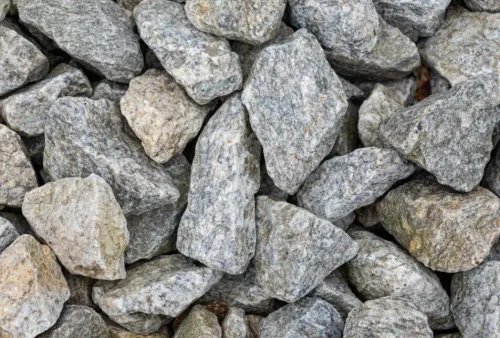
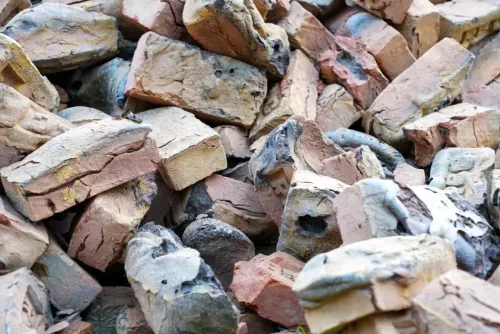
Approve sandstone from a representative production sample or mock-up, not one showroom piece: a single piece cannot show a quarry lot’s full color range, bedding planes, veins, open pores, cracks, iron staining, delamination, patching, or inconsistent thickness.
Record the acceptable visual range before placing the full order, then build a small on-site mock-up before approving cleaning, sealing, joint colors, or final appearance.
Request these documents for the actual production lot:
- Petrographic description identifying grain size, cement, pore structure, bedding, and weathering features.
- Water absorption and apparent density, with the test method and sample conditioning stated.
- Compressive strength and flexural strength or modulus of rupture, including specimen direction where bedding affects results.
- Abrasion resistance for paving, not compressive strength alone.
- Slip resistance for the specified finish in wet conditions.
- Frost-resistance data when freeze-thaw exposure applies.
| Evidence | Ask for | Compare against |
|---|---|---|
| Water absorption and apparent density | ASTM C97/C97M results, conditioning, and specimen details | Climate, drainage, staining risk, and anchorage loads |
| Compressive and flexural strength | ASTM C170/C170M and ASTM C99/C99M or ASTM C880/C880M results | Panel size, thickness, bedding direction, and fixing system |
| Abrasion and slip resistance | ASTM C241/C241M and wet-test results for the specified finish | Pedestrian or vehicle traffic and surface texture |
| Frost resistance | Freeze-thaw procedure, cycles, and retained strength or visible damage | Local freeze-thaw exposure and saturation conditions |
Reject unexplained numbers. Test reports without methods and conditioning cannot show whether the stone suits your project.
Detail sandstone for heat, monsoon rain, and polluted air
New Delhi climate demands a drained, movement-tolerant assembly, not one sandstone specification. Intense heat drives thermal movement; dust settles on ledges, monsoon wetting carries pollution and salts into pores, and trapped moisture promotes staining, efflorescence, corrosion, or decay.
Place movement joints at façade breaks, structural joints, changes in plane, returns, and around large openings; continue them through paving at substrate joints, long runs, changes of direction, and restrained edges.
Rain should shed from copings and window heads over drip edges, pass through open joints into the rainscreen cavity, descend to flashings, and exit through weeps at sills, corners, and base details. Keep the cavity open to drain; sealing it shut traps water.
Water running over metal, unprotected cut edges, or contaminated joint material can produce rust-like staining.
- Verify anchors and corners against panel thickness, stone variability, edge distances, wind loads, and fabrication tolerances; an anchor’s capacity belongs to the stone-and-anchor assembly, not the fastener alone.
- Keep joint widths, panel gaps, paving falls, and drainage paths consistent with the approved design rather than forcing tight joints around movement.
- Start pollution cleaning with water, soft brushes, or another least-aggressive method; test an inconspicuous area because acid can react with carbonate-bearing sandstone or remove surface binder.
- Treat sealers as maintenance products, not cures for weak stone, high absorption, poor drainage, or trapped moisture; confirm compatibility and plan reapplication before use.
A small mock-up should confirm wet appearance, staining risk, cleaning response, and sealer behavior before full installation.
Turn the specification into a controlled supply and installation decision
Before comparing quotations, freeze the sandstone specification and define the installation conditions:
- Cladding or paving use and traffic level
- Substrate: concrete, mortar bed, compacted granular base, or suspended slab
- Panel or slab dimensions and thickness
- Finish, edge treatment, joint layout, and joint width
- Drainage route, falls, movement joints, and weeps
- Cleaning and sealing method
- Required technical documents and test reports
| Quotation item | Require | Reject if missing |
|---|---|---|
| Stone identity | Quarry or lot identification, production samples, thickness, finish, and acceptable variation | Only a color name is given |
| Performance evidence | Absorption, apparent density, flexural strength, abrasion, slip, and frost data where relevant | Numbers lack test methods or conditioning |
| Installation scope | Fabrication tolerances, anchor arrangement, joint material, substrate preparation, and drainage details | Supply and installation responsibilities are unclear |
| Defect control | Rejected defects and replacement process recorded in writing | No agreed remedy for cracked, stained, delaminated, or wrongly sized units |
Approve one representative mock-up signed by the designer, installer, and client. Inspect its dry and wet appearance, edge treatment, anchor arrangement, joint material, and cleaning test before production. Jaishree Stones, acting as an architectural stone supplier, is most useful when it connects the selected lot to technical documents, production samples, fabrication tolerances, and installation advice.
Keep three decisions separate: whether the stone is durable enough, whether the system is engineered correctly, and whether the finished appearance and maintenance plan are acceptable.
Frequently asked questions
How should you choose sandstone for exterior cladding?
Choose the stone and cladding system together. Compare grain size, pore structure, cement type, bedding planes and weathering history, then confirm compatibility with the fixing method.
What should sandstone paving specifications include?
Specify expected traffic, water exposure, abrasion, surface finish and slip conditions. Match the stone thickness and installation build-up to those demands instead of selecting by color alone.
Which documents and samples should you request before ordering sandstone?
Inspect production samples from the intended supply and request test reports, batch details and records that identify the stone’s performance for the planned application.
How do you detail sandstone for monsoon rain and polluted air?
Plan falls, drainage, movement joints, sealant locations and ventilation behind cladding. Account for heat, repeated wetting, salt or pollution deposits and cleaning access in the detail.